
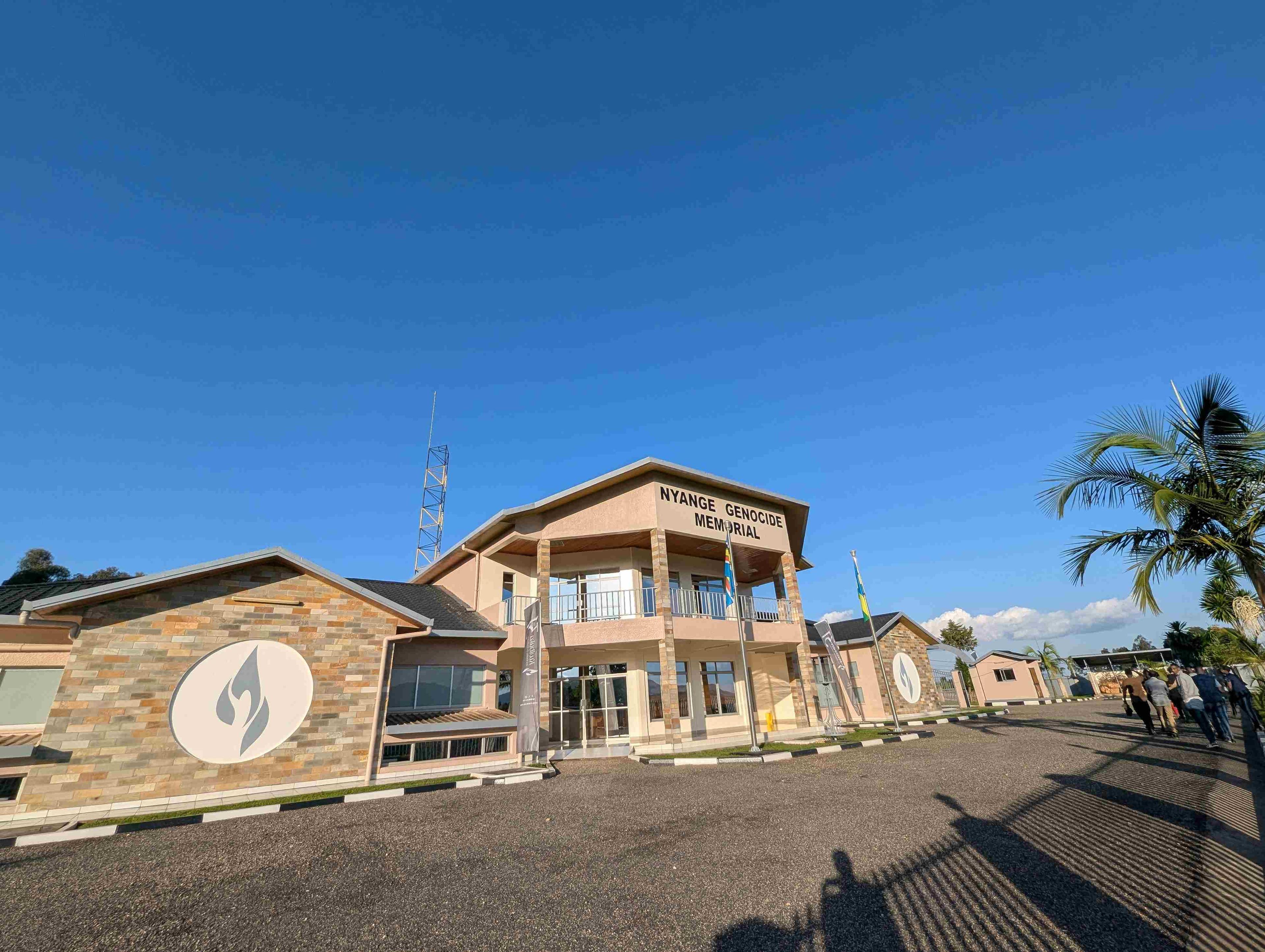
Where Silence Speaks Louder Than Words
Some places do not welcome you with beauty or comfort - they confront you with truth. Nyange is one of those places. It is a land where trust was broken, faith was betrayed, and humanity collapsed in its most terrifying form. Here, people discovered that even the house of God could be turned into a place of death, that neighbors could become enemies, and that innocence offered no protection.
Yet Nyange is not only a story of pain. It is also a place where courage rose from the ashes, where young lives chose unity over fear, and where memory now stands as a warning to the world. This reflection is drawn from a personal visit, carried by silence, tears, and responsibility.
Where Hope Led People to Death
Nyange Genocide Memorial stands on the former site of Nyange Catholic Parish - a place people once believed was the safest place on earth. A church. A house of God. A place where life should be protected. In April 1994, thousands of Tutsi ran to this parish with hope in their hearts. They believed the walls would protect them. They believed humanity would protect them. They believed faith would protect them. They believed God would protect them.
As our guide began to speak, our feet were standing in Nyange, but our souls were pulled back into 1994.
On April 11, 1994, then-mayor Gregory Ndahimana called a meeting with local leaders. Even the priest of the parish, Father Athanase Seromba, was there. A decision was made - not to save lives, but to destroy them.
Before the killings, there was hope - and that is what makes this story even more painful. Tutsi were hiding everywhere: in forests, in houses, in fields, in valleys, in fear. Then messages spread across villages. Leaders said, “Come out. Go to church. You will be protected.” Nyange Catholic Parish was presented as a place of safety, a place of faith, a place where no harm could happen.
Tutsi believed the call. Mothers left their hiding places carrying babies on their backs. Old men walked slowly, leaning on sticks. Children followed their parents, confused but trusting. Some escaped strong hiding places - places that might have saved them - because they believed the promise. They believed the leaders. They believed the church. They believed that being together would mean being safe. They walked to the Parish with fear in their hearts, but also with hope. Hope that humanity still existed. Hope that faith still meant something. But what they met instead was betrayal.
The same leaders who promised protection had already agreed on death. The church that people ran to became a trap. The walls meant to shelter them became weapons against them. What happened there was not an accident. It was planned. It was organized. It was cruelty dressed as guidance.
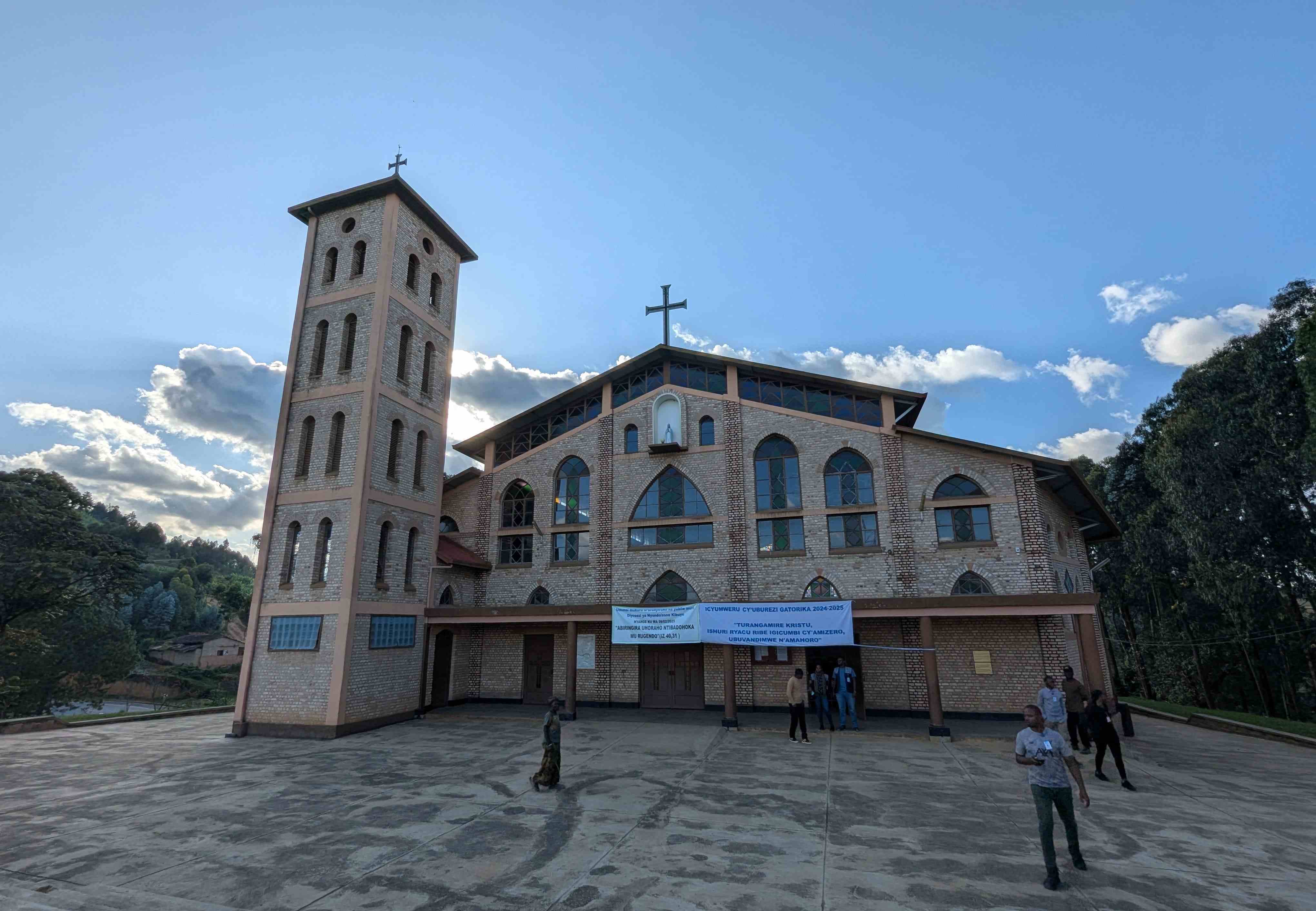 Newly Renovated Nyange Catholic Church (© Ernest Ruzindana, 2025)
In the days that followed, the church was no longer just a refuge - it became a prison surrounded by hatred. Interahamwe militia encircled Nyange Catholic Church, day after day, waiting, watching, looking for ways to break in and kill those hiding inside. The Tutsi who had fled there did not surrender easily. With fear as their companion and hope as their only weapon, they barricaded doors, blocked entrances, and protected one another as best they could. They believed with pain and desperation that the walls of the church still meant something. That faith might still speak louder than evil.
Then the tour guide paused. His voice dropped. And the words he shared cut deeper than silence. He told us that Father Athanase Seromba, the priest of Nyange Church, had spoken these words to the killers:
Father Athanase Seromba said:
“I know this is the House of God. I believe it. But since snakes are inside the church and they refuse to come out to die outside, it is better to destroy the church. There is no church with snakes inside. We will build another clean church, without snakes.”
In that moment, breathing became heavy. Tears no longer waited for permission. To hear that human beings were called snakes - while seeking safety in a house of worship - was unbearable. To know those words came from a priest made the pain sharper, colder, deeper. Faith was not just betrayed; it was weaponized.
- When a Sanctuary Became a Slaughterhouse
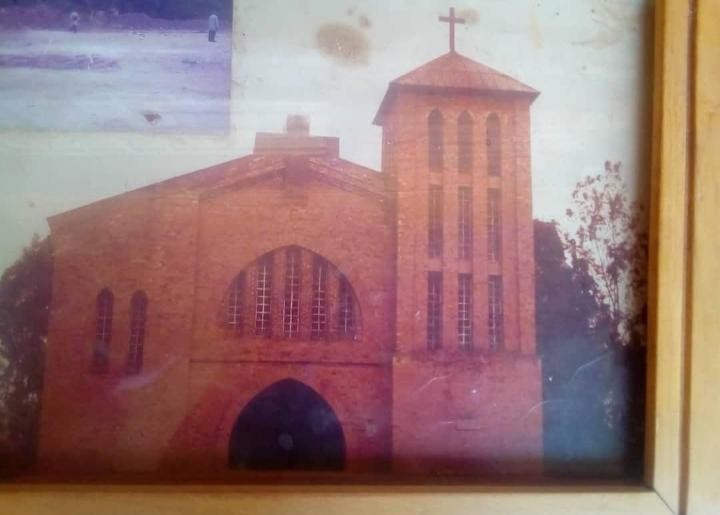 Nyange Old Catholic Church, before its destruction during the 1994 genocide against the Tutsi, where many lives were tragically lost (@ Marie Louise Ayinkamiye).
Between April 14 and April 16, hell was released. Grenades were thrown into the church where families were packed together - mothers holding children, fathers trying to shield them, the elderly pressed against the walls. The explosions did not end the suffering. When people were still breathing, on April 16, heavy machines arrived. Excavators and graders were brought in and used to collapse the church on top of human beings trapped inside. Walls fell. Stones crushed bodies. Dust filled the air.
Militias - Interahamwe - surrounded the site, forming a circle of death to make sure no one escaped. Screams rose, then disappeared, swallowed by rubble, dust, and fear. When the church was fully destroyed, the killers entered what remained of it. They walked among broken stones and broken bodies, finishing off those who were still alive.
They used machetes. They used clubs. They used spears and traditional weapons - ubuhili, nanjoro, amacumu. Up close. Without mercy. Without hesitation.
There were no soldiers to stop it. No rescue. No escape. Only human beings killing human beings, until the church, once a place of prayer, became a grave.
Standing there, knowing that people chose death unknowingly because they believed in protection, broke something deep inside us. There is no deeper pain than realizing that hope itself was used as a weapon. I understood a painful truth: The most dangerous animal on earth is a human being who has lost humanity.
When the guide said the number 7,822, it no longer sounded like a number. It sounded like 7,822 voices were cut short. Dreams buried alive. Futures erased. I could not hold my tears. None of us could.
Even after death, meaning after the genocide, the victims were denied peace. According to the tour guide, the Catholic Church proposed rebuilding a church on the same site, directly over the place where lives had been brutally taken. Survivors, through Ibuka, firmly opposed this plan, insisting that the site remain a place of memory so that the tragedy would never be forgotten. They struggled to ensure that truth would stand where silence and denial once prevailed.
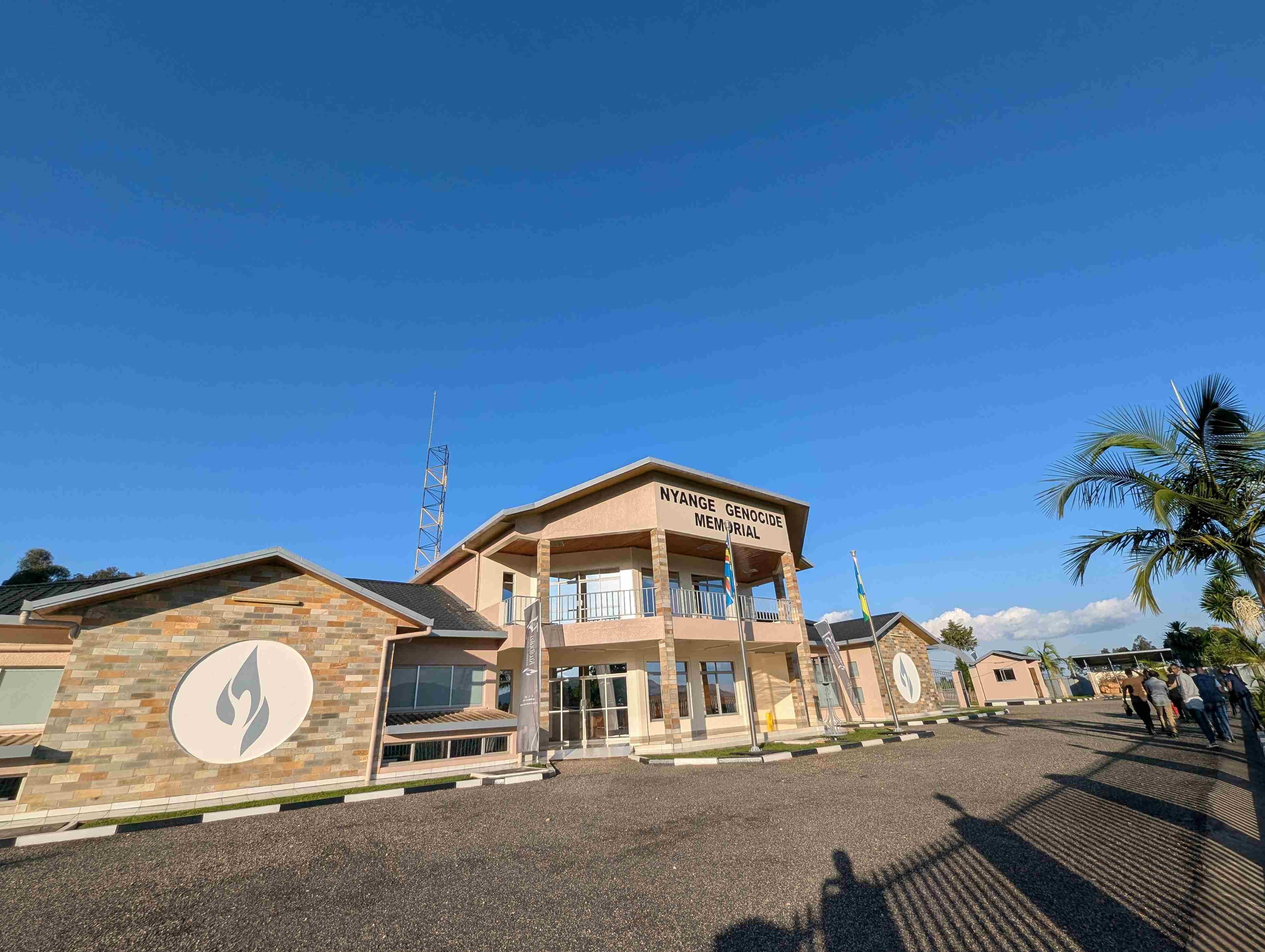 Nyange Genocide Memorial, standing on the ground where the former Nyange Catholic Church once stood before its destruction during the Genocide against the Tutsi. (© Ernest Ruzindana, 2025)
- Heroism in the Face of Death
We left the Genocide Memorial in silence. Our steps moved forward, but our hearts stayed behind, heavy with pain. Just a short walk later, on the same land that had witnessed deep sorrow, we reached a place where pain turned into bravery that will never be forgotten. This was Igicumbi cy’Intwari z’Imena - the Shrine of Rwandanness - where the story of young heroes was waiting to be told.
Standing there, it became clear that Nyange is not only a place of loss. It is also a place of rare and powerful bravery. On the night of March 18, 1997, three years after the Genocide against the Tutsi, remnants of the genocidal militia (Abacengezi) crossed back into Rwanda. They attacked Nyange Secondary School, walking through darkness with weapons and the same hateful ideology that had tried to tear our nation apart. When they burst into classrooms filled with students - teenagers who had already lived through suffering - their orders were cruel and clear: “Separate yourselves - Tutsi on one side, Hutu on the other.”
From where I stood, tears formed when I imagined that moment. These were young people - some not yet 18 - asked to divide by a label that had caused so much pain in our history. But what these students did next is nothing short of miraculous. Together, without hesitation, they answered: “Twese turi Abanyarwanda - We are all Rwandans.”
Their defiance was not slow. It was immediate. When the attackers saw that the students would not obey, they opened fire. Grenades were thrown, bullets sprayed, and chaos erupted. Six students - Sylvestre Bizimana, Chantal Mujawamahoro, Beatrice Mukambaraga, Séraphine Mukarutwaza, Hélène Benimana, and Valens Ndemeye - died on the spot. One more, Ferdinand Niyongira, would die later from his injuries. Around twenty others were wounded.
But even then, the rest didn’t scatter. They didn’t plead to be saved by renouncing each other. They stayed. They stood united. They held onto something far greater than fear - they held onto dignity, brotherhood, and love for Rwanda.
In the years that followed, survivors formed an association called Komeza Ubutwari (Uphold Heroism) to keep this spirit alive. Some continued their education, others became teachers, parents, and leaders. Today, 39 of these heroes still live, spreading their message of unity, never forgetting the classmates who did not survive.
As the story was told, tears flowed freely among those listening. Yet the bravest were crying inwardly, not only from sorrow, but from the shock of how suddenly everything unfolded. Within that pain, there was also a quiet sense of hope: these students chose to reject hatred, and some survived to carry that message forward.
Nyange teaches the world this truth: Human beings can destroy deeply - but they can also rise bravely above fear. And sometimes, the strongest courage lives in the hearts of children who choose unity over life itself.
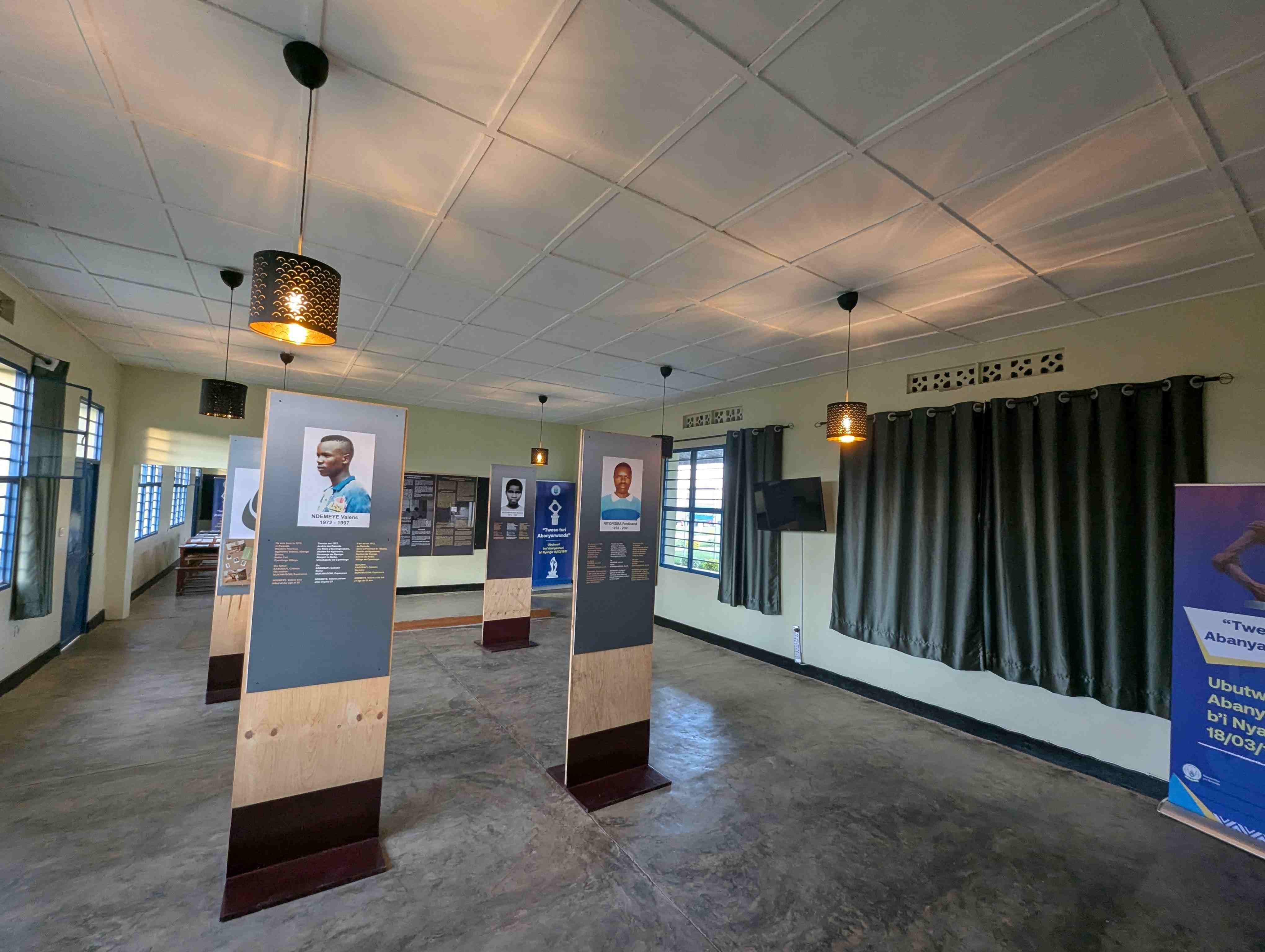 Igicumbi cy’ Ubunyarwanda - Intwari z’Imena (Nyange Site) at Nyange Secondary School, honoring the students who stood for unity and were killed by remnants of genocidal militias on March 18, 1997. (© Ernest Ruzindana, 2025)
- Nyange: A Place the World Must Face
Nyange is not a destination. It is a message written into the earth itself - a warning, a lesson, and a responsibility handed to every generation. This is a place the world must see. Not only Rwandans. Not only Africans. Everyone.
Parents, bring your children, so they learn early where hatred leads.
Teachers and students, come - so history is not reduced to dates, but felt as human truth.
Leaders, step here with humility - so power never forgets its duty to protect life.
Visitors from every nation, bring your hearts - not as tourists, but as witnesses.
Come not only to cry, but to understand.
Not only to mourn, but to remember.
Not only to visit, but to promise.
Because memory without action fades.
Silence without responsibility repeats history.
Nyange does not offer comfort.
It offers truth.
And it asks one thing of everyone who stands on its soil:
Leave human. Carry the lesson. Protect life – “everywhere”.
To prepare this blog, I relied primarily on the narrative shared by our tour guide, and I carefully cross-checked it with information from multiple credible sources to ensure accuracy and consistency. These sources include Africa Press, The EastAfrican, Imvaho Nshya, Wikidata, Survivors Fund, and the Genocide Archives of Rwanda. In addition, the reflections are informed by my own on-site observations and photographs taken during the visit, capturing the current state and atmosphere of the memorial sites.
REFERENCES
- 1. “25 years later, Nyange remembers gruesome attack, student heroes” - Africa Press (detailed reporting on the 1997 attack on Nyange Secondary School, student responses, casualties, and hero recognition). Available at: Africa Press, 2022
- 2. Nyange: A resting place for heroes (contextual article about the Nyange site, history of the memorial, and how the students are honored). Available at: The EastAfrican, 2016
- 3. “Ngororero: Ikigo cy’i Nyange kigiye kwigishirizwamo umuco wo kurwanya ivangura”. Available at: Imvaho Nshya, 2022
- 4. Nyange Genocide Memorial. Wikidata. Entry Q130760049. A structured data description identifying the memorial as a Memorial of the 1994 Genocide against the Tutsi in Rwanda, located in Nyange Sector, Ngororero District, Western Province, Rwanda. Available at: https://www.wikidata.org/wiki/Q130760049
- 5. Russell, D. (2021, April 19). Nyange Parish Genocide Memorial. Survivors Fund. Retrieved from: Survivors Fund
- 6. Genocide Archive of Rwanda. Memorials category page. This online archival collection lists genocide memorial sites across Rwanda, including Nyange, and provides documents, photographs, and context about Rwanda’s genocide memorial network. Genocide Archive of Rwanda
Leave a Comment
Comments (0)